Showing posts with label donald maass. Show all posts

Wednesday, October 2, 2019

Insecure Writer's Support Group

The first Wednesday of every month is officially Insecure Writer’s Support Group day.


From the group's website:

Purpose: To share and encourage. Writers can express doubts and concerns without fear of appearing foolish or weak. Those who have been through the fire can offer assistance and guidance. It’s a safe haven for insecure writers of all kinds!

Posting: Post your thoughts on your own blog. Talk about your doubts and the fears you have conquered. Discuss your struggles and triumphs. Offer a word of encouragement for others who are struggling. Visit others in the group and connect with your fellow writer - aim for a dozen new people each time - and return comments. This group is all about connecting!

...

Today, I share with you a few of my favorite writing quotes to encourage and inspire you:


Tuesday, September 10, 2019

Book Review: THE EMOTIONAL CRAFT OF FICTION by Donald Maass

Having devoured two other books written by Donald Maass, I was thrilled to finally read THE EMOTIONAL CRAFT OF FICTION. (I was also quite pleased to read it while lounging in my hammock up in the mountains, finding it fascinating how the book's cover went so well with nature's surrounding trees.) Scroll on down for my complete review of the book.


THE EMOTIONAL CRAFT OF FICTION
by Donald Maass
December 30, 2016 (Writer's Digest Books)
ISBN: 978-1440348372


Description from the Publisher:

While writers might disagree over showing versus telling or plotting versus pantsing, none would argue this: If you want to write strong fiction, you must make your readers feel. The reader's experience must be an emotional journey of its own, one as involving as your characters' struggles, discoveries, and triumphs are for you.

That's where The Emotional Craft of Fiction comes in. Veteran literary agent and expert fiction instructor Donald Maass shows you how to use story to provoke a visceral and emotional experience in readers. Topics covered include:

  • emotional modes of writing
  • beyond showing versus telling
  • your story's emotional world
  • moral stakes
  • connecting the inner and outer journeys
  • plot as emotional opportunities
  • invoking higher emotions, symbols, and emotional language
  • cascading change
  • story as emotional mirror
  • positive spirit and magnanimous writing
  • the hidden current that makes stories move

Readers can simply read a novel...or they can experience it. The Emotional Craft of Fiction shows you how to make that happen.

About the Author:

Donald Maass is the author of more than 16 novels. He now works as a literary agent, representing dozens of novelists in the SF, fantasy, crime, mystery, romance and thriller categories. He speaks at writer's conferences throughout the country and lives in New York City.


My Review:

If you're wanting to improve your skills as a writer, read books written by Donald Maass. 

One of the elements I love best about his books is when he includes exercises to put principles into practice. In THE EMOTIONAL CRAFT OF FICTION, these "exercises" are each titled "Emotional Mastery." There are 34 different ones throughout the book, and there is even a checklist in the back of the book to mark your progress completing the exercises.

Within "Emotional Mastery 8: The Meaning of Everything" Maass writes: "Choose some dry information that must be imparted for your story to make sense. Who has this knowledge? How does that character see these facts as no one else does? ... What is good, bad, worrisome, reassuring, or in some other way revealing about these facts? What does your character love or hate about what these facts are saying? What would she change about this information if possible? What would he change about himself? ... Don't be afraid of slowing the pace. When you deepen the meaning of things, no one will complain" (page 67).

An additional highlight of this book is the chapter at the end: "The Writer's Emotional Journey." While I loved the entire book, this chapter had me nodding my head and saying, "Yes." 

Maass writes: "Many fiction writers do not feel worthy of their calling. ... When writers approach their craft that way, it shows. You can sense when fiction is masking cynicism or anger. ... The spirit that you bring to your writing desk either infects your pages or enlivens them. ... How you feel inside is how we will feel in reading. ... In some ways the most important work you do in writing your novel is the work you do on yourself. ... your fundamental outlook, your positive spirit, your embrace of goodness, your faith in humanity. It shows in ... granting strength to your characters and filling their hearts with expectation" (pages 177-178).

I could continue to quote passages and sing the praises of this book, or I could simply say: Go read this book if you want to improve your skills as a writer. Oh, wait, that's how I started this review! Go. Now. Read. Practice. Improve. And ...

Enjoy the gift of being called a writer.


Monday, August 12, 2019

Creating an Authentic Voice for Your Novel


The concept of “voice” is an elusive one for many writers, but when you utilize techniques to develop your author’s voice, the narrative voice, and each character’s voice, your manuscript will become significantly more dynamic.


On September 18, 2019, at 7pm, I will be teaching my one-hour workshop on how to improve your author's voice at the Nampa Public Library. There is no charge to attend this event. Bring five pages of your manuscript to utilize during this hands-on process.


Here are a few of my favorite quotes on this topic:

“The author’s voice is about the chosen words, how we report the various senses, how the world we have invented becomes real.” -- Jane Yolen, Author


“A unique way of putting words together … a unique sensibility, a distinctive way of looking at the world. … Voice is a natural attribute. You no more control it than you can control the color of your eyes—nor would you want to. ... Set your voice free, set your words free … set your heart free. It is from the unknowable shadows of your subconscious that your stories will find their drive and from which they will draw their meaning. No one can loan you that or teach you that. Your voice is your self in the story.” – Donald Maass, Literary Agent


“A strong, distinctive, authoritative writing voice is something most fiction writers want—and something no editor or teacher can impart. There are, after all, no rules for writing like yourself. Voice is, however, something you can bring out in yourself.”
– Browne & King, Self-Editing for Fiction Writers


“It is … the outlook, opinions, details, delivery, and original perspectives that an author brings to his tale. Above all, a singular voice is not a lucky accident; it comes from a storyteller’s commitment not just to tell a terrific story but to tell it in a way that is wholly his own.” -- Donald Maass, Literary Agent


Wednesday, July 5, 2017

#IWSG: Valuable Writing Lessons

www.insecurewriterssupportgroup.com 

The first Wednesday of the month is the Insecure Writer's Support Group! 

The question posed this month: What is one valuable lesson you've learned since you started writing?

Well, if you'd like to read my "formal" answer to this question, hop on over to Writer's Digest where I wrote an article titled "7 Things I've Learned So Far."

Or for a quicker answer, here are three tips I've learned from experts in the writing field:


What about you?

What is one valuable lesson you've learned since you started writing?


Thursday, May 4, 2017

Developing Your VOICE

The concept of “voice” is an elusive one for many writers, but when you utilize techniques to develop your author’s voice, the narrative voice, and each character’s voice, your manuscript will become significantly more dynamic.

Below is an exercise from Donald Maass's The Fire in Fiction to help find and develop your author's voice.


1. Choose a page from your manuscript.
2. Rewrite the page, stripping all colorful description and replacing nouns and verbs with generic choices. Make the characters and action bland.
3. Rewrite the page again, using all upper crust formality.
4. Rewrite it again, making main character easily offended by everything.
5. Rewrite again, observing as a foreign tourist, with awe and bewilderment.
6. Rewrite it again, utilizing the wisdom of an elderly person.
7. Finally, rewrite it as it will appear in print, embracing your own voice—opinions, observations, sensibilities.

(The above exercise is paraphrased from Donald Maass’s The Fire in Fiction.)


An author's voice is “… the outlook, opinions, details, delivery, and original perspectives that an author brings to his tale. Above all, a singular voice is not a lucky accident; it comes from a storyteller’s commitment not just to tell a terrific story but to tell it in a way that is wholly his own.”

-- Donald Maass, Literary Agent


What do you think? Have you mastered your own distinctive author's voice?


Tuesday, September 20, 2016

More Inspirational Writing Quotes

Looking for a boost or a kick in the right direction? Here are three tips from the writing experts:


Now get off the Internet and get back to your writing project!


Wednesday, March 2, 2016

#IWSG: Inspiring Quotes for Your Daily #Writing

http://www.insecurewriterssupportgroup.com/

Here are FIVE quotes to help get your fingers tapping on the keyboard today!


"Look for nodes of conjunction, such as setting. For instance, suppose in your main story line you have a wedding, while a subplot involves a breakup. Why not have both occur at the same time and in the same place?" -- Donald Maass (WRITING THE BREAKOUT NOVEL, p.188)

"Setting is a powerful storytelling element, and it certainly makes its mark on dialogue. Where you set a scene shapes what the characters in the scene say and how they say it." -- Deborah Halverson (WRITING YA FICTION FOR DUMMIES, p.80)

"Show, Don't Tell ... You want to make sure the audience knows about a guy's N.Y. Giants past? Show team pictures on the wall of his apartment." -- Blake Snyder (SAVE THE CAT, p. 147)

"Capture how a place makes a point-of-view character feel." -- Donald Maass (WRITING THE BREAKOUT NOVEL, p.101)

"Think of each scene as a mini-movie. It must have a beginning, middle, and an end. And it must also have something happen that causes the emotional tone to change drastically." -- Blake Snyder (SAVE THE CAT, p. 110)

Tuesday, November 24, 2015

5 Inspiring Quotes for #Writing

Need a little push to get your writing off the ground today?


Here are five of my favorite quotes on the topic:


"Wounded villains often wear their wounds like a badge and use them to justify their villainy." -- James Frey (HOW TO WRITE A DAMN GOOD THRILLER)

"Whether or hero is skilled or not, it's the relative size of the challenge that makes these stories work. And one rule of thumb is: The badder the bad guy, the greater the heroics." -- Blake Snyder (SAVE THE CAT)

"If your every sentence admits a doubt, your writing will lack authority. Save the auxiliaries would, should, could, may, might, and can for situation involving real uncertainty." -- Strunk & White (THE ELEMENTS OF STYLE)

"Whatever drives the main character ... make sure it is an inner conflict as powerful as any outer conflict could hope to be: urgent, unavoidable, and full of an emotional appeal that anyone can feel." -- Donald Maass (WRITING THE BREAKOUT NOVEL)

"YA writers must master ... a youthful sensibility. Young people are learning to be self-aware rather than self-centric, and their appreciation of others' places ... in the world is still maturing. ... see the world as youngsters see it, letting that view influence your phrasing and sentiments." -- Deborah Halverson (WRITING YA FICTION FOR DUMMIES)


How about you? Do you have a favorite writing quote? Share it in the comments. :) Happy writing!

Friday, April 4, 2014

D is for Donald Maass


So … you want to be a writer? Where do you start? How do you get there? No worries. This month I’ll be sharing my A to Z list of writer’s resources: books, blogs, and beyond! Check back each day to find helpful resources for improving your writing and navigating your way through the publishing industry.


D is for Donald Maass

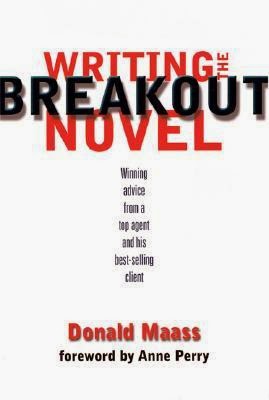
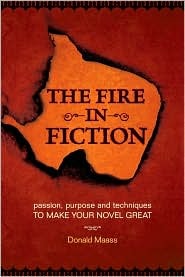
I have found the books written by Donald Maass to be extremely inspiring and resourceful as a writer. I refer back to his books time and time again. Two of my favorites:


According to his website (click here for more info) "Donald Maass founded the Donald Maass Literary Agency in New York in 1980. His agency sells more than 150 novels every year to major publishers in the U.S. and overseas.  He is the author of The Career Novelist (1996),Writing the Breakout Novel (2001), Writing the Breakout Novel Workbook(2004), The Fire in Fiction (2009) and The Breakout Novelist (2011).  He is a past president of the Association of Authors’ Representatives, Inc."

What about you? Have you read any of his books? What did you think of them?

Monday, February 3, 2014

A Quote for Inspiration


“To write a breakout novel is to run free of the pack. It is to delve deeper, think harder, revise more, and commit to creating characters and plot that surpass one’s previous accomplishments. It is to say “no” to merely being good enough to be published. It is a commitment to quality” – Donald Maass (Writing the Breakout Novel, p.12).

Do you have a favorite writing quote to share?

Friday, October 18, 2013

A Quote for Your Writing Inspiration

"Conflict that holds our attention for long periods of time is meaningful, immediate, large scale, surprising, not easily resolved and happens to people for whom we feel sympathy" (Donald Maass, WRITING THE BREAKOUT NOVEL, p.136).

Wednesday, August 21, 2013

A Writer's Quote for Inspiration

"Make your characters suffer. That can be tough to do, but consider this: Being nice does not engender great drama. Trials and tests are the stuff of character building, of conflict. Ask yourself, who is the one ally your protagonist cannot afford to lose? Kill that character. What is your protagonist's greatest physical asset? Take it away. What is the one article of faith that for your protagonist is sacred? Undermine it. How much time does your protagonist have to solve his main problem? Shorten it. Push your characters to the edge, and you will pull your readers close" -- Donald Maass (WRITING THE BREAKOUT NOVEL, p. 78). [emphasis added]

Monday, July 15, 2013

Feed Your Characters

"You are a breakout novelist, and you have characters with mouths to feed" (Donald Maass, WRITING THE BREAKOUT NOVEL, page 112).

Monday, May 6, 2013

Unpredictable Endings


"The secret to unpredictable endings ... is to allow ... your protagonist ... the possibility of failure" - Donald Maass (Writing the Breakout Novel, p.196).

Wednesday, March 13, 2013

Revision Inspiration!


"Make the changes you craft for your main character permanent and irreversible. ... Make sure when the dust settles, your hero will never be the same again" -- Donald Maass (WRITING THE BREAKOUT NOVEL, p.156).

Monday, February 18, 2013

REVISING: Scenes

"A well-constructed scene has a mini-arc of its own: a beginning, rise and climax or reversal at the end" -- Donald Maass (WRITING THE BREAKOUT NOVEL, p. 174).

Monday, February 4, 2013

Inner Conflict

"Whatever drives the main character ... make sure it is an inner conflict as powerful as any outer conflict could hope to be: urgent, unavoidable and full of an emotional appeal that anyone can feel" - - Donald Maass (Writing the Breakout Novel, p. 172).


What drives the main character of your WIP?

Wednesday, October 17, 2012

Well Constructed Scenes


"A well-constructed scene has a mini-arc of its own: a beginning, rise and climax or reversal at the end" - - Donald Maass (Writing the Breakout Novel, p.174).