No. I did not forget. :)
It's been a crazy busy day, with the highlight being the fact we found my daughter a gorgeous floor length formal dress at a consignment shop for only $39. Much better than the $175 for brand new dresses at the mall.
Man, I wish I had an unlimited source of money, because, DANG, she did look gorgeous in the $175 dress!
But the $39 dress is pretty, too! And she's such a good sport. She felt spoiled just to go and try on dresses.
So ... please, come back on Friday, and we'll try again to finish the lay versus lie post! :)
What's the most you've ever spent on a dress? Did you wear it more than once?

Wednesday, February 27, 2013

Monday, February 25, 2013
WRONG! Lay versus Lie
After reading the comments from my last post, I decided to tackle the lay vs. lie issue; imagine my frustration when I visited the Grammar Girl's website and read this:
"... I love Eric Clapton, and his song Lay Down Sally can actually help you remember the difference between lay and lie ... because he's wrong. ... If you're more of a Bob Dylan fan, you can remember that "Lay Lady Lay" is also wrong.”
*sigh*
Yes, of COURSE, the website goes on to explain in great detail the difference between lay and lie; however, I felt it necessary to take a brief pause and listen to the songs that are "wrong":
So, now that we know what's wrong (??) come back on Wednesday, and we'll tackle what's right.
haha
Or you could just work hard to choose words other than lay and lie.
:)
Wednesday, February 20, 2013


Monday, February 18, 2013
REVISING: Scenes
"A well-constructed scene has a mini-arc of its own: a beginning, rise and climax or reversal at the end" -- Donald Maass (WRITING THE BREAKOUT NOVEL, p. 174).
Friday, February 15, 2013
Book Review: PUKKA'S PROMISE
Are you a cultural conformist? A few days ago, I would have
answered, NO! But after reading this book, I realized, I have succumbed to the cultural
demands and mantras regarding dogs.

Our two-year-old Beagle-Maltese starting marking his
territory, inside the house, and we figured time to get him “fixed.” Before we
made the appointment, the thought occurred to me, I should check this book
sitting in my to-be-read pile and see what it has to say about neutering dogs.
Yup, there’s a chapter on that, and so I skipped right to it
and imagine my surprise when I read that while spaying and neutering dogs does
save millions of unwanted animals from dying unnecessarily in shelters,
altering your dog and denying him of essential sex hormones could end his life
prematurely. But what about marking and humping, you know, those “undesirable”
traits that we’ve been taught as a culture can easily be resolved by castrating
your dog? I felt like an idiot when I read (what I really already knew down in
my core) that a dog can be trained to behave appropriately. If a dog is exhibiting
undesirable behaviors, look to his person in charge.
Now, don’t get me wrong, Kerasote does an excellent job of
presenting both sides of the issue. There are benefits to spaying and neutering,
but these are NOT the only options if your reason for altering your dog is
merely birth control. There are other procedures that can accomplish this –
tubal ligation and vasectomy just to name two.
The essential sex hormones can help protect your dog from
cancers and orthopedic injuries. “In North America, hemangiosarcoma is the
leading cause of death for Golden Retrievers, a good reason to think carefully
before spaying or neutering a dog from this breed” (page 340).
There’s also a chapter on immunizations. Yes, your dogs need
to be immunized, but do they need all of those shots every single year? Studies
are finding that many of the immunizations actually last much longer than
originally thought, and giving your dog unnecessary immunizations can
eventually comprise his health. And if you never board your dog in a facility
with a large number of dogs and never take your dog to dog shows, why are you
having him receive bordetella and coronavirus shots which prevent kennel cough?
I was highly impressed with the content of this book, but I
was also very impressed with Kerasote’s ability to weave technical and medical
information into the writing without boring me out of my mind. Kerasote doesn’t
just tell us what experts he interviewed and the information gleaned from them,
but he also describes what that expert looked like, what he or she wore, and
where they sat during the interview. Kerasote takes us on the journey with him.
This is the first book by Ted Kerasote I’ve read. I highly
recommend it, and I am looking forward to reading his other books as well.
If you love dogs at all, even an ounce, this is a must read
book.
What are you reading?
Wednesday, February 13, 2013
THINK before you REVISE!
Hopefully, you are WAY smarter than I am, and when you read the passage below, you will think to yourself, "Well, of course!" I, on the other hand, read it and had to think very hard and ask myself, "Is that why my current project is taking so long to revise?" SHEESH.
THINK before you REVISE. It could save you a ton of time and effort!!!
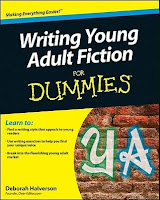
Deborah Halverson writes, "Create a revision list that you can work through item by item during several different passes through the manuscript. Prioritize your revision list so that big-picture items (such as character, plot, and setting work) are first, followed by smaller items (such as language tweaks). You want to start big and finish small to avoid revising specific sentences that may be completely omitted when you fix a bigger problem" (p. 203, WRITING YOUNG ADULT FICTION FOR DUMMIES).
Okay. Back to work.
:)
THINK before you REVISE. It could save you a ton of time and effort!!!

Deborah Halverson writes, "Create a revision list that you can work through item by item during several different passes through the manuscript. Prioritize your revision list so that big-picture items (such as character, plot, and setting work) are first, followed by smaller items (such as language tweaks). You want to start big and finish small to avoid revising specific sentences that may be completely omitted when you fix a bigger problem" (p. 203, WRITING YOUNG ADULT FICTION FOR DUMMIES).
Okay. Back to work.
:)
Monday, February 11, 2013
How Great Thou Art
I could post something on the topic of writing, but instead, let's watch a video. :) A country version of my favorite hymn. It's makes my soul sing. :)
Friday, February 8, 2013

Wednesday, February 6, 2013
Agent of Change
"Main character is always the agent. That is, she's always choosing, always acting, always moving the plot by her behavior" Veronica Roth (page 10 of the bonus material in DIVERGENT).
Is the main character of your WIP making choices and acting, or is she being acted upon and reacting to the choices of other characters?
Is the main character of your WIP making choices and acting, or is she being acted upon and reacting to the choices of other characters?
Monday, February 4, 2013
Inner Conflict
"Whatever drives the main character ... make sure it is an inner conflict as powerful as any outer conflict could hope to be: urgent, unavoidable and full of an emotional appeal that anyone can feel" - - Donald Maass (Writing the Breakout Novel, p. 172).
What drives the main character of your WIP?
What drives the main character of your WIP?
Friday, February 1, 2013
Hey - You're Okay! You'll be Fine!
I just finished watching another great TED Talk featuring Ze Frank. In the talk, he explained the history behind this song which was very moving. Here is just the song ... and beware, there is some weird static at the end. Enjoy the song and carry on!
Oh but then I discovered there are a bunch of homemade videos for this song, and now here is the best one ... if you like animals ... this one made me cry!!! And the audio is much better than the one above.
Have a great weekend, and remember to just breathe! :)
Oh, and if you'd like to know more about the story behind the song, check this out:
http://www.zefrank.com/chillout/
Oh, and if you'd like to know more about the story behind the song, check this out:
http://www.zefrank.com/chillout/
Wednesday, January 30, 2013
A to Z Challenge 2013

Oh my! I knew the list was opening today for the annual A to Z Challenge ... so I hopped on over there to sign up for it, and there's already 290 people signed up! WOW!
This is an awesome blog hop that happens during the entire month of April. If you've never done it before, I highly encourage you to participate. It's a great way to meet other bloggers and challenge your blog posting skills.
http://www.a-to-zchallenge.com/
Monday, January 28, 2013
CONFLICT
I'm in the process of revising my WIP, and I thought I'd go back and look at some of my previous blog posts on the topic of revising.
I came across THIS POST about conflict in every chapter, and I considered reposting it because I found it helpful to reread the information. However, after reading the comments again on that post, I decided maybe we should discuss what CONFLICT means, instead.
To say that every chapter, every scene, every page needs to have conflict, does NOT mean it has to have a fight, an argument, a chase scene, or a high level of action. What it means is: there needs to be opposing ideas or emotions in every scene.
Ask yourself the questions from the PREVIOUS POST, but then really think: What is my character feeling at the beginning of this scene? What does she hope to accomplish? What's stopping her? And have your character struggle (internally and/or externally) to overcome those obstacles, and have the scene end with the character feeling the opposite from the beginning of the scene. This creates tension, page turning, and an exciting story.
Does every chapter of your WIP have conflict? Every scene? Every page? Do you think that's too much?
I came across THIS POST about conflict in every chapter, and I considered reposting it because I found it helpful to reread the information. However, after reading the comments again on that post, I decided maybe we should discuss what CONFLICT means, instead.
To say that every chapter, every scene, every page needs to have conflict, does NOT mean it has to have a fight, an argument, a chase scene, or a high level of action. What it means is: there needs to be opposing ideas or emotions in every scene.
Ask yourself the questions from the PREVIOUS POST, but then really think: What is my character feeling at the beginning of this scene? What does she hope to accomplish? What's stopping her? And have your character struggle (internally and/or externally) to overcome those obstacles, and have the scene end with the character feeling the opposite from the beginning of the scene. This creates tension, page turning, and an exciting story.
Does every chapter of your WIP have conflict? Every scene? Every page? Do you think that's too much?
Wednesday, January 23, 2013
Positive Affirmation
The time will come
when, with elation,
you will greet yourself arriving
at your own door, in your own mirror,
and each will smile at the other’s welcome.
Derek Walcott
The Nobel laureate was born on this day in 1930.
Monday, January 21, 2013

Friday, January 18, 2013
No Barking!
In 2011, we added a sweet little puppy (named Rascal) to our family. He's the little white dog next to the giant black dog (named Sabbath):

Now, almost two years later, he's not as "white" as he once was, but he's a cute little stinker. He's half Beagle, and he puts that nose to the ground whether it's covered in snow or not!

Our big giant black dog has been very patient. Rascal is the true definition of an "ankle biter." He's is constantly grabbing at Sabbath to get him to play and chase him.

And Sabbath does love to give chase. In the picture below, he's launching off his hind legs to run along the fence. He loves barking at the neighbor's dogs (don't worry, we're friendly with them, and have a mutual agreement about barking and when it's acceptable!). If you look closely, Rascal is a little white blur near Sabbath's tail. He always wants to play. And watching these two chase each other around the backyard is quite entertaining.

Do you have dogs? Do you wish your neighbors' dogs would stop barking?
Wednesday, January 16, 2013
Writer's Block
Usually the revision process is my favorite part of writing a new story. I simply love taking things apart and putting them back together, in a better, stronger way. However, with my current work-in-progress, I've struggled to get back into the revision mode after completing the first draft of the manuscript.
Yesterday, I came across this great bit that has really helped me. It seems so obvious ... now.
Brandon Mull (New York Times Best-selling author) was asked, "How do you get past writer's block?"
His answer: "Usually it hits because I'm writing a bad scene. I have to go back and find how to make the scene interesting and important. Sometimes I discover that the scene was unnecessary, so I have to kill it and write an alternate scene. Taking some time away from the project sometimes helps, like going on a walk, getting outside."
He also said in another answer, "The other component is daydreaming. ... I partly get to know the characters through prolonged imagining. The better I get to know them through daydreaming, the easier it becomes to stay true to them in what they think, say, and do."
To read the entire interview: CLICK HERE
... so ...
I considered where I was stuck in my revision process. I considered what might be wrong with the scene. What's not working? And then before actually revising anything, I've taken the time to daydream with the character. Imagine more. Worry less. Seems like an obvious step, now, but I was stuck in the mud and had trouble seeing clearly through the mess!
What are you working on right now? Revisions? Drafting? Final edit?
Yesterday, I came across this great bit that has really helped me. It seems so obvious ... now.
Brandon Mull (New York Times Best-selling author) was asked, "How do you get past writer's block?"
His answer: "Usually it hits because I'm writing a bad scene. I have to go back and find how to make the scene interesting and important. Sometimes I discover that the scene was unnecessary, so I have to kill it and write an alternate scene. Taking some time away from the project sometimes helps, like going on a walk, getting outside."
He also said in another answer, "The other component is daydreaming. ... I partly get to know the characters through prolonged imagining. The better I get to know them through daydreaming, the easier it becomes to stay true to them in what they think, say, and do."
To read the entire interview: CLICK HERE
... so ...
I considered where I was stuck in my revision process. I considered what might be wrong with the scene. What's not working? And then before actually revising anything, I've taken the time to daydream with the character. Imagine more. Worry less. Seems like an obvious step, now, but I was stuck in the mud and had trouble seeing clearly through the mess!
What are you working on right now? Revisions? Drafting? Final edit?
Monday, January 14, 2013
So You Wanna Write a Book
"... begin with the free and unfettered pouring of story from your imagination. ... just let the story flow, without any thought for practical issues. Later on, if there are problems with your story, or imposed practical issues to deal with, use your knowledge of structure to root out those problems or satisfy those practical demands. The value of structural understanding is in story optimisation and problem resolution, not as a creative starting point. Ideally, your ideas will pour out and there will be no problems with the story you have written; in which case who cares what the structure is? Creativity first, always and forever. Structure secondarily, and only as a tool for analysis and repair" (THE STORY BOOK by David Baboulene, p.64) [color and emphasis added]
While I absolutely love this quote, I would say this applies to writers who've written at least one manuscript. I would advise anyone who has NEVER written a story (of any length) to read at least one book or take one class on the craft of writing. And better yet, make that class or book specific to the genre or style you're interested in pursuing.
What do you think?
Were you aware of structure and/or rules of the genre before you started writing?
While I absolutely love this quote, I would say this applies to writers who've written at least one manuscript. I would advise anyone who has NEVER written a story (of any length) to read at least one book or take one class on the craft of writing. And better yet, make that class or book specific to the genre or style you're interested in pursuing.
What do you think?
Were you aware of structure and/or rules of the genre before you started writing?
Friday, January 11, 2013
Book Review: COULD IT BE B12?

I'm glad I read this, and I read the whole thing. And while I learned a lot from the book, I can't give it more than three stars simply because the writing was so over-the-top fanatical. Surely not every ailment on the face of the earth can be caused by a B12 deficiency ... okay, maybe the authors didn't say that exactly, but close.
I was also surprised to read on page 4, "B12 is produced in the gut of animals, it's also the only vitamin that you can't obtain from plants or sunlight. Plants don't need B12, so they don't produce or store it. To obtain B12 from your diet, you need to eat meat, poultry, fish, eggs, dairy products, or food fortified with B12..."
So, I'm still researching that concept. According to veganforum.com, "Vitamin B12 is found in algae, peas, clover, alfalfa, mustard..." and "Foods fortified with vitamin B12 (as cyanocobalamin) may be a potential problem if cooked."
But Pacholok writes, "...several plants that some supplement manufacturers claim are high in B12, such as spirulina and tempeh, actually contain "pseudo-B12" analogues that block the uptake of the real vitamin, sometimes causing dangerous deficiencies" (page 4).
I also really take issue with any person that places blame (of any sort) with mothers who are well intentioned doing the best they can to care for the well-being of their children. Maybe I misread or misunderstood, but Pacholok writes, "Vegetarian and vegan mothers also are the most likely to breastfeed for long periods of time, which puts nursing children at high risk of B12 deficiency if the mothers don't supplement their diets correctly. Children can be severely crippled by B12 deficiency..." (page 95).
The extremist language used in the book was certainly a turn-off, but I can't deny the potentially useful and life-changing information in this book. If you are suffering from any physical ailment, it might be worth your time to consider whether or not you are deficient in vitamin B12 and give this book a read.
Also, be aware that the authors really beat it into the reader’s head that getting a “typical” blood test for B12 deficiency is not good enough. They go on and on and on about the reasons, but just so you know, if you’re going to be tested, you need the other tests recommended by the authors.
And, if you want to supplement your diet with B12 … I’ve done the research for you (well, I did it for me, but I’ll share the info with you).
A supplement needs to be a SUBLINGUAL B12 tablet that has 1000-2000 mcg of B12 in it and it needs to be made from either hydroxocobalamin or methylcobalamin. Many vitamins that are mass produced use the less expensive form of B12 made from cyanocobalamin which uses Cyanide. Why put that in your body?
If you're not getting B12 shots, then you need to take a sublingual B12. A sublingual is placed under your tongue and you let it dissolve there. The blood vessels under your tongue absorb the vitamin directly into your blood stream, so the vitamin doesn’t have to go through your digestive system before “maybe” being absorbed.
Before reading this book, I had been taking oral B12 tablets made from the cyanocobalamin with minimal results. So now I’ve purchased new B12 vitamins – sublingual hydroxocobalamin 2000mcg. And, I’ll let you know if they make a difference for me.
Wednesday, January 9, 2013
Resolution Bandwagon
So everyone's posting their New Year's Resolutions ... maybe you want to, maybe you don't ... but if you enjoy reading the FABULOUS ideas of others ... here's one you absolutely MUST read:
EJ Wesley
Thank you EJ for an awesome list! :)
EJ Wesley
Thank you EJ for an awesome list! :)
Subscribe to:
Comments (Atom)